Boost Creativity: Engaging Activities for Kids
I. The Importance of Creative Development
Creativity is not merely about artistic talent; it’s a fundamental cognitive skill that allows children to think divergently, solve problems innovatively, and adapt to new situations with resilience. Cultivating creativity in children fosters their emotional intelligence, improves their communication skills, and bolsters their self-confidence. When children are encouraged to explore, experiment, and express themselves freely, they develop a strong sense of self-efficacy, believing in their ability to impact the world around them. This intrinsic motivation fuels their curiosity and fosters a lifelong love of learning. Creative activities, particularly in early childhood, lay the foundation for future success in various domains, including academics, professional life, and personal relationships. Furthermore, a creative outlet provides children with a healthy way to process emotions, manage stress, and find joy in the everyday.
II. Art-Based Activities
-
Painting Extravaganza: Move beyond traditional paintbrushes and explore diverse painting techniques. Use sponges, cotton balls, toothbrushes, leaves, or even fingers to create unique textures and patterns. Experiment with different types of paint, such as watercolor, acrylic, tempera, and finger paint. Provide a variety of surfaces beyond paper, like canvas boards, rocks, wood scraps, or fabric. Encourage abstract expression by letting children paint to music or paint their feelings using colors. Try painting with shaving cream mixed with food coloring for a sensory and visual delight. Remember, the process is more important than the product; focus on the joy of exploration.
-
Sculpting Sensations: Engage tactile learning by exploring various sculpting materials. Playdough and clay are excellent starting points, offering a malleable medium for creating three-dimensional objects. Introduce air-dry clay for projects children can keep. Experiment with found objects like cardboard tubes, egg cartons, and natural materials like twigs and leaves to create mixed-media sculptures. Provide tools like rolling pins, cookie cutters, and plastic knives to enhance the sculpting experience. Encourage children to sculpt animals, characters, or abstract designs, fostering spatial reasoning and fine motor skills.
-
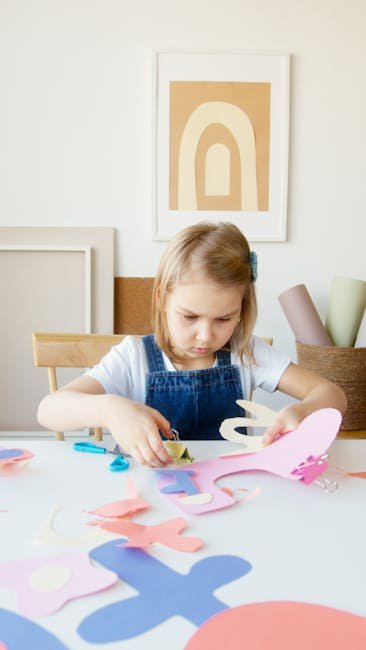
Collage Creations: A collage is a visual feast of textures, colors, and shapes. Gather a collection of magazines, newspapers, fabric scraps, yarn, buttons, beads, and other found objects. Provide glue, scissors, and a sturdy surface like cardboard or construction paper. Encourage children to cut, tear, and arrange the materials to create unique compositions. This activity fosters visual problem-solving, spatial awareness, and fine motor skills. Collages can be thematic, abstract, or representational, allowing for endless possibilities. Consider using natural materials gathered from a nature walk for an earthy and organic collage.
-
Drawing and Illustration: Encourage drawing by providing a variety of drawing tools, such as colored pencils, crayons, markers, charcoal, and pastels. Offer different types of paper, including sketch paper, construction paper, and textured paper. Introduce drawing prompts, such as “Draw your dream house” or “Draw a fantastical creature.” Encourage children to observe their surroundings and draw what they see. Teach basic drawing techniques, such as shading, perspective, and proportion, to enhance their skills. Explore different drawing styles, from cartooning to realism.
-
Printmaking Fun: Introduce the basics of printmaking using simple materials. Potato prints are a classic and easy-to-implement activity. Cut potatoes in half and carve designs into the flat surface. Dip the potato in paint and press it onto paper to create a print. Explore other printmaking methods, such as using sponges, leaves, or bubble wrap to create textured prints. Lino cutting can be introduced to older children under supervision, allowing for more intricate designs. Encourage experimentation with different colors and patterns.
III. Music and Movement Activities
-
Musical Instrument Exploration: Provide a variety of musical instruments, such as drums, tambourines, xylophones, recorders, and shakers. Encourage children to explore the sounds each instrument makes and experiment with different rhythms and melodies. Create a DIY instrument station with materials like pots, pans, wooden spoons, and rice-filled containers. Encourage children to create their own instruments using recycled materials.
-
Creative Dance and Movement: Put on music and encourage children to move freely, expressing themselves through dance. Provide scarves, ribbons, or streamers to enhance the movement experience. Play different types of music to inspire different moods and movements. Encourage children to create their own dance routines or stories through movement. Introduce basic dance steps and formations. Explore different dance styles, such as ballet, jazz, and hip-hop.
-
Singing and Songwriting: Encourage children to sing songs they know and make up their own songs. Provide prompts for songwriting, such as “Write a song about your favorite animal” or “Write a song about your feelings.” Encourage children to create melodies and rhythms for their songs. Introduce basic music theory concepts, such as notes, chords, and scales.
-
Sound Effects Storytelling: Create stories and incorporate sound effects using voices, instruments, and found objects. Encourage children to create their own sound effects to enhance the storytelling experience. This activity fosters auditory imagination and creative expression. For example, rustling paper can represent wind, and clapping hands can represent thunder.
-
Rhythm Games: Play rhythm games using clapping, stomping, and snapping. Introduce different rhythms and patterns. Encourage children to create their own rhythm games. Use musical instruments to create rhythmic accompaniment. This activity develops coordination, timing, and musicality.
IV. Storytelling and Dramatic Play Activities
-
Storytelling Prompts: Provide storytelling prompts, such as “Once upon a time…” or “What if…?” Encourage children to create their own stories based on the prompts. Use picture cards, puppets, or props to inspire storytelling. Encourage children to act out their stories.
-
Puppet Shows: Create puppets using socks, paper bags, or cardboard tubes. Provide a puppet stage or create one using a blanket and chairs. Encourage children to create their own puppet shows. This activity fosters creativity, communication skills, and dramatic expression.
-
Dramatic Play Corner: Create a dramatic play corner with costumes, props, and scenery. Encourage children to engage in imaginative play, acting out different roles and scenarios. This activity fosters social skills, empathy, and problem-solving abilities. Common themes include playing house, doctor, teacher, or chef.
-
Improvisation Games: Play improvisation games, such as “Yes, and…” or “One-word story.” These games encourage spontaneity, quick thinking, and collaboration.
-
Reader’s Theater: Choose a story and assign roles to children. Encourage them to read their lines with expression and emotion. This activity improves reading comprehension, fluency, and public speaking skills.
V. Building and Construction Activities
-
Block Building: Provide a variety of blocks, such as wooden blocks, plastic blocks, and magnetic blocks. Encourage children to build structures, towers, and designs. This activity fosters spatial reasoning, problem-solving skills, and fine motor skills.
-
Fort Building: Encourage children to build forts using blankets, pillows, chairs, and other household items. This activity fosters creativity, problem-solving skills, and teamwork.
-
Lego Creations: Provide Lego bricks and encourage children to build anything they can imagine. Lego building fosters spatial reasoning, problem-solving skills, and fine motor skills. Encourage themed builds or challenges.
-
Cardboard Construction: Provide cardboard boxes, tape, scissors, and other materials. Encourage children to build structures, vehicles, or other creations. This activity fosters creativity, problem-solving skills, and resourcefulness.
-
Nature Art Structures: Using fallen branches, leaves, stones and other natural items to create nature art. This activity can be done on the beach or in a forest.
VI. STEM-Based Activities
-
Simple Machines: Explore simple machines, such as levers, pulleys, and gears. Build simple machines using household materials. This activity introduces basic engineering concepts and problem-solving skills.
-
Coding Games: Introduce basic coding concepts through games and activities. Use coding toys or online platforms to teach children how to program. This activity fosters logical thinking, problem-solving skills, and computational thinking.
-
Science Experiments: Conduct simple science experiments, such as making slime, building volcanoes, or growing plants. This activity fosters curiosity, observation skills, and scientific reasoning.
-
Engineering Challenges: Present engineering challenges, such as building a bridge that can hold a certain weight or designing a device that can protect an egg from breaking when dropped. This activity fosters problem-solving skills, creativity, and teamwork.
-
Robotics Introduction: Explore robotics. This activity enhances creativity, problem-solving skills and scientific and engineering reasoning.
These activities are designed to spark imagination, encourage exploration, and develop essential creative skills in children. Remember to foster a supportive and encouraging environment where children feel free to experiment, take risks, and express themselves without fear of judgment.